

The Cult of Zeus and the Possible Location of Its Sanctuary at Antiokheia Paralios

LIBRI XII (2026) 189-207
Geliş Tarihi: 07.09.2026 | Kabul Tarihi: 04.10.2026
DOI: 10.5281/zenodo.23756971
Elektronik Yayın Tarihi: 29.10.2026


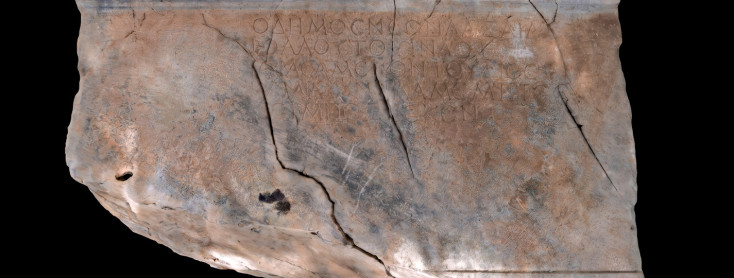
Abstract: Although various cults are attested at Antiokheia Paralios, commonly known as Antiochia ad Cragum, the precise locations of their sanctuaries remain largely uncertain. Three newly discovered honorific inscriptions from the city provide further evidence for the previously attested cult of Zeus. One inscription honours an individual named Neon, who served as a priest of Zeus, while the preserved text and epigraphic context of the other two likewise point to the priesthood of Zeus. Since two of these inscriptions were discovered within the temenos of the structure known as the Peristyle Temple, this structure can now be associated with the cult of Zeus and regarded as a strong candidate for the location of his sanctuary. This proposal provides a new basis for reconsidering the possible spatial organization of the epigraphically attested cults of the Augusti and Dea Roma, as well as their relationship with the cult of Zeus.
Keywords: Antiokheia Paralios, Rough Cilicia, Zeus, Cult of the Augusti, Cult of Dea Roma, Antiokhos IV
Öz: Yaygın olarak Antiochia ad Cragum adıyla bilinen Antiokheia Paralios kentinde çeşitli kültlerin varlığı belgelenmiş olsa da bunlara ait kutsal alanların konumları büyük ölçüde belirsizliğini korumaktadır. Kentte ele geçen üç yeni onurlandırma yazıtı, daha önce de belgelenmiş olan Zeus kültüne ilişkin yeni veriler sunmaktadır. Yazıtlardan biri, Neon isimli bir kişinin Zeus rahibi olarak onurlandırıldığını belgelerken, diğer ikisinde de korunmuş metin ve epigrafik bağlam aynı rahiplik görevine işaret etmektedir. Bu yazıtlardan ikisinin Peristylli Tapınak olarak bilinen yapının temenos alanında ele geçmiş olması, söz konusu yapının Zeus kültüyle ilişkilendirilmesine ve Zeus kutsal alanının konumu açısından güçlü bir aday olarak değerlendirilmesine olanak sağlamaktadır. Bu öneri, kentte epigrafik olarak belgelenen Augustuslar ve Dea Roma kültlerinin olası mekânsal organizasyonlarının yanı sıra bunların Zeus kültüyle olan ilişkilerini yeniden değerlendirmek için de yeni bir çerçeve sunmaktadır.
Anahtar sözcükler: Antiokheia Paralios, Dağlık Kilikia, Zeus, İmparatorlar Kültü, Dea Roma Kültü, Antiokhos IV
Adak M. 2020, “Pamphylia ve Pisidia’da Kent Eşrafı ve Resmi Unvanları”. Eds. O. Tekin, Ch. H. Roosevelt & E. Akyürek, Tarih Boyunca Anadolu’da Hayırseverlik, Birinci Uluslararası Suna & İnan Kıraç Akdeniz Uygarlıkları Sempozyumu, 26-29 Mart 2019. Antalya, 47-72.
Adak M. 2023, “Cités, rois et Romains: nouveaux textes épigraphiques d’Asie Mineure / Cities, Kings and Romans: New Epigraphic Texts from Asia Minor”. Annuaire de l’EPHE, Section des sciences historiques et philologiques 154 (2022-2023), 136-145.
Akgün Kaya E. 2017, “İkinci Sofistik Dönem, Sofist, Retor ve Filozofların Dini Görevleri”. Cedrus 5, 217-239.
Arnaoutoglou I. N. 2021, “Socii Monumenti in Roman Cilicia?”. Eds. I. E. Tzamtzis, P. Antonopoulos & Ch. Stavrakos, ΑΡΕΤΗΝ ΤΗΝ ΚΑΛΛΙΣΤΗΝ: Mélanges en l’honneur de Kalliopi A. Bourdara. Athens, 79-124.
Barrett A. A. 1989, Caligula, The Corruption of Power. London.
Bean G. E. & Mitford T. B. 1962, “Sites Οld and New in Rough Cilicia”. AnatSt. 12, 185-217.
Bean G. E. & Mitford T. B. 1965, Journeys in Rough Cilicia in 1962 and 1963. Wien.
Bean G. E. & Mitford T. B. 1970, Journeys in Rough Cilicia 1964-1968. Wien.
Borgia E. 2013, “The Rule of Antiochus IV of Commagene in Cilicia: a reassessment”. Eds. M. C. Hoff & Rh. F. Townsend, Rough Cilicia, New Historical and Archaeological Approaches, Proceedings of an International Conference held at Lincoln, Nebraska, October 2007. Oakville, 87-99.
Burrell B. 2004, Neokoroi, Greek Cities and Roman Emperors, Leiden.
Can B. & Hoff M. C. 2014, “Antiochia ad Cragum, Batı Dağlık Kilikya’da Bir Roma Kenti ve Kazıları”. Eds. H. Kasapoğlu & M. A. Yılmaz, Anadolu’nun Zirvesi’nde Türk Arkeolojisinin 40 Yılı. Ankara, 373-393.
Curty O. 2015, Gymnasiarchika, Recueil et analyse des inscriptions de l’époque hellénistique en l’honneur des gymnasiarques. Paris.
Dagron G. & Feissel D. 1987, Inscriptions de Cilicie. Paris.
Dmitriev S. 2000, “Observations on the Historical Geography of Roman Lycaonia”. GRBS 41, 349-375.
Dodd E. K. 2020, Roman and Late Antique Wine Production in the Eastern Mediterranean: A Comparative Archaeological Study at Antiochia ad Cragum (Turkey) and Delos (Greece). Summertown.
Elton H. 2002, “The Economic Fringe: The Reach of the Roman Empire”. Eds. L. de Blois & J. Rich, The Transformation of Economic Life under the Roman Empire, Proceedings of the second Workshop of the International Network Impact of Empire (Roman Empire, c. 200 B.C. – A.D. 476) Nottingham, July 4 – 7, 2001. Amsterdam, 172-184.
Elton H. 2007, “Geography, Labels, Romans, and Kilikia”. Eds. H. Elton & G. Reger, Regionalism in Hellenistic and Roman Asia Minor. Bordeaux, 25-33.
Er Scarborough Y. 2017, The Funerary Monuments of Rough Cilicia and Isauria. Oxford.
Erdemgil S. & Özoral F. 1975, “Antiochia ad Cragum”. TAD 38, 55-71.
Erdoğmuş E., B. Pulatsu, A. Gaggioli & M. C. Hoff 2020, “Reverse Engineering a Fully Collapsed Ancient Roman Temple through Geoarchaeology and DEM”. International Journal of Architectural Heritage 15/12, 1-21.
Facella M. 2005, “Coinage and the Economy of Commagene (First Century BC-first Century AD)”. Eds. S. Mitchell & C. Katsari, Patterns in the Economy of Roman Asia Minor. Swansea, 225-251.
Giobbe Ch. 2013, “Roman Temples in Rough Cilicia: a Diachronic Analysis”. Eds. M. C. Hoff & Rh. F. Townsend, Rough Cilicia, New Historical and Archaeological Approaches, Proceedings of an International Conference Held at Lincoln, Nebraska, October 2007. Oxford, 128-144.
Hagel S. & Tomaschitz K. 1998, Repertorium der westkilikischen Inschriften: Nach den Scheden der kleinasiatischen Kommission der österreichischen Akademie der Wissenschaften. Wien.
Hoff M. C., B. Can, Rh. F. Townsend, E. Erdoğmuş & T. Howe. 2016a, “The Antiochia ad Cragum Archaeological Research Project, 2014 Season”. AST 33/2, 463-476.
Hoff M. C., B. Can, Rh. F. Townsend, E. Erdoğmuş & T. Howe. 2016b, “The Antiochia ad Cragum Archaeological Research Project, 2014 Season”. KST 37/3, 581-595.
Hoff M. C., B. Can, Rh. F. Townsend, T. Howe, A. Kızılarslanoğlu & G. Dobos. 2018, “Antiochia ad Cragum 2016 ve 2017 Yılları Kazı Çalışmaları”. Anmed 16, 1-14.
Hoff M. C., Rh. F. Townsend & B. Can. 2013, “The Antiochia ad Cragum Archaeological Research Project, 2012 Season”. Anmed 11, 154-163.
Hoff M. C., Rh. F. Townsend & E. Erdoğmuş. 2006, “The Rough Cilicia Archaeological Project, 2005 Season”. Anmed 4, 99-104.
Hoff M. C., Rh. F. Townsend, & E. Erdoğmuş. 2009, “The Antiocheia ad Cragum Archaeological Research Project: Northeast Temple, 2008 Season”. Anmed 7, 6-12.
Hoff M. C., Rh. F. Townsend, B. Can & E. Erdoğmuş. 2014a, “The Antiochia ad Cragum Archaeological Research Project in 2013”. Anmed 12, 6-13.
Hoff M. C., Rh. F. Townsend, E. Erdoğmuş & S. Türkmen. 2008, “The Antiocheia ad Cragum Archaeological Research Project: Northeast Temple 2007”. Anmed 6, 95-100.
Hoff M., Rh. F. Townsend, B. Can & E. Erdoğmuş. 2014b, “The Antiochia ad Cragum Archaeological Research Project, 2013 Season”. Kazı Sonuçları Toplantısı 36/3, 295-307.
Huber G. 1967, “The Sites and their Principal Buildings”. Eds. E. Rosenbaum, G. Huber & S. Onurkan, A Survey of Coastal Cities in Western Cilicia, Preliminary Report. Ankara 1-47.
Jones A. H. M. 1971, The Cities of the Eastern Roman Provinces. Oxford.
Karamut İ. & Russell J. 1999, “Nephelis: a Recently Discovered Town of Coastal Rough Cilicia”. JRA 12, 355-371.
Kropp A. J. M. 2009, “King – Caesar – God, Roman Imperial Cult Among Near Eastern Client Kings in the Julio-Claudian Period”. Hgs. M. Blömer, M. Facella & E. Winter, Lokale Identität im Römischen Nahen Osten, Kontexte und Perspektiven. Stuttgart 99-150.
Kropp A. J. M. 2013, “Crowning the Emperor an unorthodox image of Claudius, Agrippa I and Herod of Chalkis”. Syria 90, 377-389.
Lenski N. 1999, “Assimilation and Revolt in the Territory of Isauria from the 1-st Century BC to the 6-th Century AD”. JESHO 42, 413–465.
Lozano F. 2007, “Divi Augusti and Theoi Sebastoi: Roman Initiatives and Greek Answers”. The Classical Quarterly 57/1, 139-152.
Lozano F. 2011, “The Creation of Imperial Gods: Not Only Imposition Versus Spontaneity”. Eds. P. P. Iossif, A. S. Chankowski & C. C. Lorber, More than Men, Less than Gods, Studies on Royal Cult and Imperial Worship. Leuven, 475-520.
Mellor R. 1975, ΘΕΑ ΡΩΜΗ: The Worship of the Goddess Roma in the Greek World. Göttingen.
Mitford T. B. 1990, “The Cults of Roman Rough Cilicia”. ANRW II 18/3, 2131-2160.
Nollé J. 2007, Kleinasiatische Losorakel: Astragal- und Alphabetchresmologien der hochkaiserzeitlichen Orakelrenaissance. München.
Oktan M. & Tekocak M. 2025, “The Themis Leonideios in the Light of a New Inscription”. Libri XI, 211-233.
Paltiel B. 1991, Vassals and Rebels in the Roman Empire, Julio-Claudian Policies in Judaea and the Kingdoms of the East. Bruxelles.
Pilhofer Ph. 2018, Das frühe Christentum im kilikisch-isaurischen Bergland, Die Christien der Kalykadnos-Region in den ersten fünf Jahrhunderten. Berlin & Boston.
Pilhofer Ph. 2020, “Die Geschichte des ‚Rauhen Kilikien‘ unter den Römern”. Klio 102/1, 71-120.
Pilhofer S. 2006, Romanisierung in Kilikien? Das Zeugnis der Inschriften. München.
Price S. R. F. 1984, Rituals and Powers: The Roman Imperial Cult in Asia Minor. Cambridge.
Puech B. 2002, Orateurs et sophistes grecs dans les inscriptions d’époque impériale. Paris.
Ramsay W. M. 1890, The Historical Geography of Asia Minor. London.
Robert J. & Robert L. 1967, “Bulletin épigraphique”. REG 80/379-383, 453-573.
Robert J. & Robert L. 1972, “Bulletin épigraphique”. REG 85/406-408, 364-526.
TIB 5.1 Hild F. & Hellenkemper H. 1990, Kilikien und Isaurien, 1. Teil (TIB 5). Wien.
Kalıcı Bağlantı Adresi: http://www.libridergi.org/2026/lbr-0365
Mehmet OKTAN
Dr., Akdeniz University, Faculty of Letters, Department of Ancient Languages and Cultures, Antalya, Türkiye. mehmetoktan@akdeniz.edu.tr
Mehmet TEKOCAK
Prof. Dr., Selçuk University, Faculty of Letters, Department of Archaeology, Konya, Türkiye. mtekocak@yahoo.com